The Intersection of Augmented Reality and Roblox: The Future of Virtual Worlds
Anúncios
The Rise of Augmented Reality in Gaming
The gaming landscape is rapidly evolving, with augmented reality (AR) leading the charge into immersive experiences. One of the most engaging platforms in this transformation is Roblox, a game creation system that allows users to build and share their own virtual worlds. As a pioneer in user-generated content, Roblox serves as the perfect canvas for the integration of AR technology.
Anúncios
Imagine a world where:
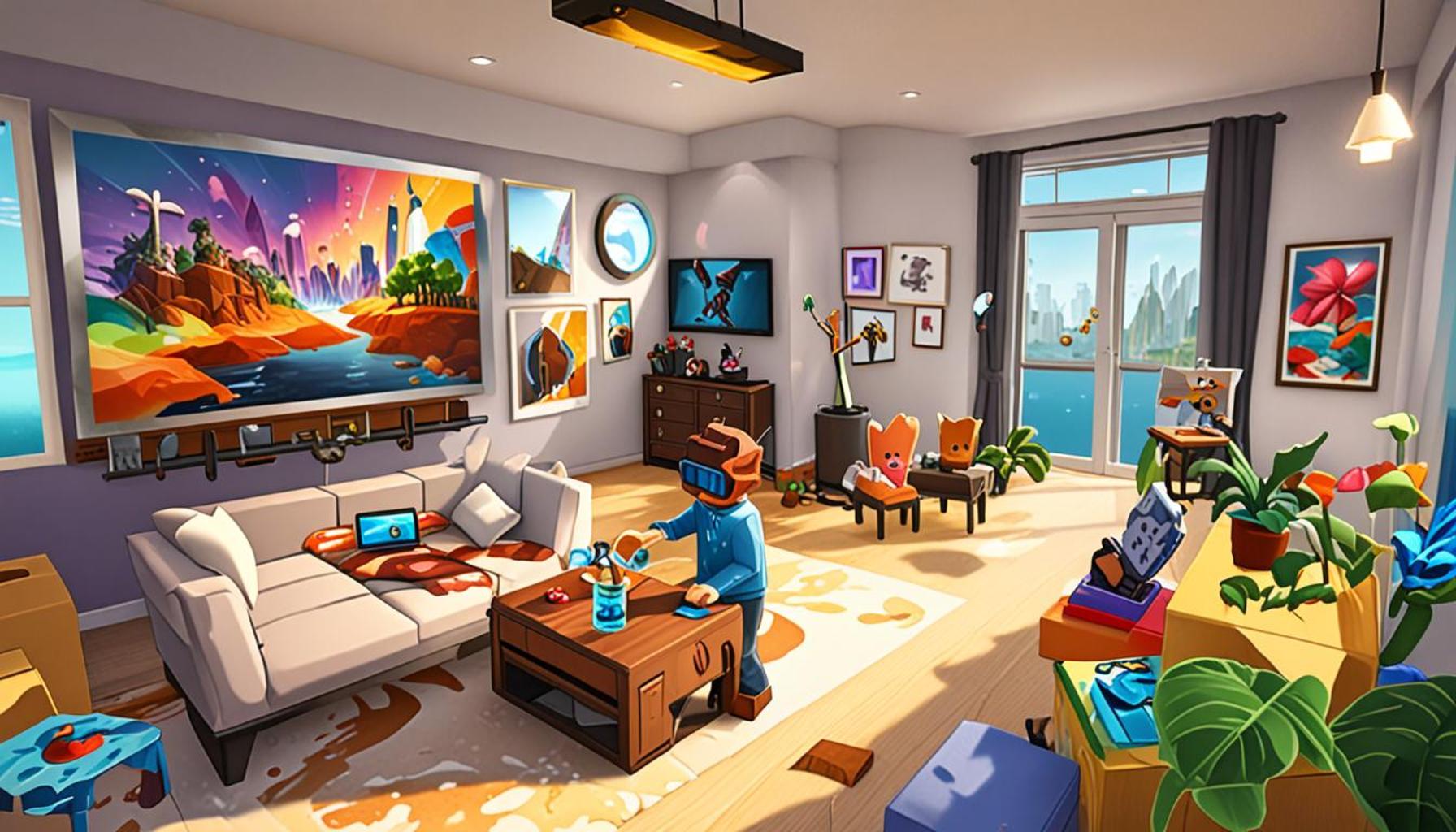
- Players can interact with virtual objects overlaying their real environment, allowing them to collect treasures in their living rooms or battle magical creatures in their backyards.
- Game developers can create experiences that blend digital and physical realms, such as an AR experience where players hunt for virtual artifacts in their actual neighborhoods.
- Communities can gather in new ways, fostering collaboration beyond traditional gaming boundaries, with events like virtual concerts or art shows taking place in spaces that mix physical and digital elements.
This convergence of AR and Roblox not only enhances user engagement but also opens new avenues for innovation. The potential applications are vast and varied, such as:
Anúncios
- Educational tools that teach through interactive simulations, where students can learn about human anatomy by visualizing 3D models overlaid on their own bodies.
- Social experiences that connect friends regardless of their geographical locations, allowing users to partake in shared adventures from anywhere in the country.
- Marketing strategies that bring brands to life within virtual spaces, where a Coke can might be seen rolling across your kitchen floor, ready to be “picked up” for a refreshing virtual drink in a game.
As we venture further into this exciting intersection, it is crucial to understand the implications, challenges, and possibilities that lie ahead. What will the future of virtual worlds look like with AR on platforms like Roblox? Issues such as data privacy, the digital divide, and the potential for addiction to these immersive experiences are all aspects that require careful consideration.
The educational sector seems particularly poised for transformation, given that AR can create captivating learning experiences. Imagine a classroom where history comes alive as students can visualize significant events and interact with pivotal figures of the past directly in the midst of their physical environment.
Dive into the exploration of these emerging technologies to discover the limitless potential they hold. Companies are increasingly investing in AR integration within gaming, aiming not just to entertain but to innovate and educate. As this technology continues to develop, the possibilities for entertainment and education seem boundless, suggesting a future where the boundaries between the virtual and real worlds are increasingly blurred.
DISCOVER MORE: Click here for insights on creating educational games in Roblox
Unleashing Creativity Through Augmented Reality
At the heart of the Roblox experience lies a vibrant community of creators and gamers who are constantly pushing the boundaries of what’s possible in virtual worlds. The integration of augmented reality (AR) into this platform not only enhances gameplay but also fosters unparalleled creativity among users. By marrying AR with user-generated content, Roblox opens up new dimensions of interaction that blur the lines between the digital and physical realms.
In a typical Roblox game, players can design their worlds using an array of tools, and with AR, those worlds can now manifest in the players’ real-life environments. Imagine walking through a park only to see a massive virtual castle towering above the trees, or standing in your living room where friends appear as avatars, enabling instant social interactions without a console or screen in between. This merging of real life with virtual play elevates the gaming experience significantly, creating a sense of presence that traditional gaming simply cannot achieve.
The applications of AR in Roblox are not merely about enhanced graphics or visuals; they offer transformative opportunities across various sectors, transforming both entertainment and education. Some noteworthy potential applications include:
- Enhanced Storytelling: Players can engage with narrative-driven games that incorporate real-world elements, allowing for a rich storytelling experience that feels more personal and immersive.
- Collaborative Creation: Multiple users can come together in a shared AR experience to build and refine virtual worlds, fostering teamwork and innovation.
- Real-World Learning: Educational modules that link physical locations with digital information can support experiential learning, where students interact with virtual content that complements their curriculum.
The introduction of AR technology into Roblox is poised to not only change the way games are played but also the nature of gaming communities. With virtually limitless possibilities, players can collaborate from any location, experimenting and learning in a shared augmented space. This not only nurtures friendships and connectivity but also helps artists and developers hone their skills through collective creativity.
Moreover, the evolution of Roblox AR experiences raises important questions about accessibility and inclusivity within the gaming ecosystem. As AR technology becomes more mainstream, it’s essential to ensure that platforms are equipped to cater to users with varying levels of access to technology. Addressing the digital divide will be crucial in creating a truly immersive environment where everyone can experience the benefits of augmented reality.
As we delve deeper into this intersection of augmented reality and Roblox, the potential for innovation becomes increasingly apparent. The future of virtual worlds not only promises enhanced gameplay but also threats to privacy and social interaction that must be navigated thoughtfully. Thus, players and developers alike stand at the forefront of a new era, eagerly anticipating what lies ahead in this dynamic convergence.
As the realms of augmented reality (AR) and Roblox converge, we stand on the brink of a transformative shift in how users engage with virtual environments. The integration of AR technology into Roblox offers unparalleled interactivity, making user experiences more immersive and captivating. Imagine exploring a virtual world where digital avatars seamlessly blend with real-world environments, allowing users to digitize their surroundings and share them with friends in real-time.This phenomenon not only enhances gameplay but also introduces unique opportunities for education and social interaction. For instance, educators can create engaging lessons that leverage AR, allowing students to discover complex subjects through interactive experiences. Meanwhile, social dynamics shift as players can physically interact with their environments while still being part of the expansive Roblox community.Key to this evolution is the accessibility of AR tools. Developers are encouraged to innovate with user-friendly software that permits effortless integration of AR features. Roblox serves as a platform that nurtures creativity, and with AR capabilities, we can expect an explosion of user-generated content that will redefine creative expression in virtual spaces.Moreover, businesses are beginning to recognize the potential of AR within Roblox as a marketing tool. Brands can create interactive experiences that captivate players, driving both engagement and loyalty. By blending play with advertising in an organic manner, companies can forge deeper connections with their target audiences.As we venture further into this era where technology breaks down barriers between the virtual and physical worlds, the implications for gaming, education, and commerce are vast. In the hands of innovative creators, the fusion of augmented reality and Roblox could lead us to entirely new dimensions of virtual interaction, potentially reshaping our understanding of digital experiences forever.
DISCOVER MORE: Click here to dive deeper
Immersive Experiences and Social Connections
The combination of augmented reality (AR) and Roblox is not only redefining gameplay but is also significantly enhancing how players interact with each other. As social experiences become increasingly important in gaming, AR provides a platform for users to engage in ways that were previously unimaginable. The ability to subscribe to experiences that merge real-life environments with digital interactivity creates a dynamic social ecosystem within Roblox.
Imagine a scenario where players can attend virtual events, such as concerts or gaming competitions, while simultaneously interacting with friends or strangers in their local surroundings. Utilizing AR, Roblox can host live events that users can participate in from their homes, while digital elements are superimposed onto their real-world locations. This “hybrid event” model fosters communal interaction, where players can physically gather while simultaneously engaging with a globally connected Minecraft-like experience. It marries the joy of shared activities with the excitement of exploration, making it an attractive proposition for event organizers and participants alike.
Another area that stands to gain immensely from AR integration is user-generated content sharing. With tools that allow players to scan and import real-world objects into their Roblox creations, users can create augmented environments where digital blends seamlessly with physical. For example, consider a player designing a treasure hunt game where real landmarks in a city become pivotal points to discover hidden prizes within the virtual experience. This kind of gameplay not only makes each player’s adventure unique but also encourages exploration in the physical world, ultimately bridging the gap between the digital and tangible.
Furthermore, as gamers invest time and creativity into their Roblox experiences, there arises an opportunity for monetization. Player-developers can design AR elements that enhance their games, leading to unique offerings that attract users willing to pay for premium content. In this evolving landscape, the idea of valuing digital content may shift, as the lines blur between physical and virtual property ownership. Companies could explore licensing deals with creators who successfully use AR to bolster their game’s appeal, cultivating a more sustainable artistic community.
Moreover, considering the marketing potential in the intersection of AR and Roblox, brands can forge deeper connections with audiences. With AR experiences prompting interaction, companies can create branded virtual items that players can interact with in their environments. Fast food chains, for instance, could create a real-world scavenger hunt where players collect AR-based food items in exchange for discounts or promotional rewards. Such campaigns not only elevate brand engagement but also encourage users to share their experiences on social media platforms, effectively harnessing the organic reach and clout of digital millennials and Gen Z gamers.
As the AR technology landscape continues to advance, it’s crucial to track how these changes will influence the future of virtual worlds. Enhancements like spatial audio and realism can set new benchmarks for immersive experiences, further nurturing player bases and fostering creative collaborations. However, as developers offer new conveniences, they will also need to heed potential issues regarding user interaction and safety within this augmented realm. Ethical considerations surrounding user data privacy and moderation policies will become increasingly critical in maintaining trust within the Roblox community.
The journey at the intersection of augmented reality and Roblox is only beginning. Each day brings fresh developments, rapidly propelling the boundaries of what creators and players can achieve in this interconnected landscape. A cultural shift awaits—a vibrant tapestry where digital and physical experiences unite to redefine entertainment, learning, and community engagement in exhilarating ways.
DIVE DEEPER: Click here to uncover more insights
Conclusion
As we stand on the brink of a new era in gaming, the intersection of augmented reality (AR) and Roblox promises a future rich with immersive experiences and innovative interactions. The potential of AR to enhance Roblox gameplay not only transforms the way players engage with the platform but also transcends geographical boundaries, enabling shared adventures that blend the digital and physical worlds seamlessly. From virtual concerts that come alive in users’ backyards to unique treasure hunts that harness local landmarks, these developments foster creativity and exploration in unprecedented ways.
Moreover, the opportunities for user-generated content and monetization will empower creators to push the envelope further, creating a sustainable ecosystem that rewards innovation and originality. Brands, too, have much to gain by leveraging AR within Roblox, crafting engaging marketing campaigns that resonate with younger audiences and inspire authentic interactions within their local communities.
However, the ascent of this technological convergence will not be without challenges. Developers must prioritize ethical considerations, particularly concerning user privacy and safety, to maintain the integrity of the platform. As stakeholders navigate these complexities, an exciting opportunity awaits—a vibrant space where virtual worlds can thrive, shaped by user creativity and communal connections.
Ultimately, the future of virtual worlds lies in the fusion of augmented reality and platforms like Roblox. This combination serves not only as a catalyst for entertainment but also as a powerful tool for learning and social engagement. As this exciting landscape continues to evolve, it invites players and creators alike to explore uncharted territories, igniting a revolution in how we experience both digital and physical realities.